<?xml version="1.0" encoding="utf-8"?><feed xmlns="http://www.w3.org/2005/Atom" ><generator uri="https://jekyllrb.com/" version="3.10.0">Jekyll</generator><link href="http://shailenmishra.com/atom.xml" rel="self" type="application/atom+xml" /><link href="http://shailenmishra.com/" rel="alternate" type="text/html" /><updated>2025-11-24T03:50:21+00:00</updated><id>http://shailenmishra.com/atom.xml</id><title type="html">Shailen Mishra</title><subtitle>Shailen Mishra&apos;s personal website</subtitle><author><name>Shailen Mishra</name></author><entry><title type="html">What worries students about remote learning?</title><link href="http://shailenmishra.com/teaching/2020/09/01/what-worries-students/" rel="alternate" type="text/html" title="What worries students about remote learning?" /><published>2020-09-01T00:00:00+00:00</published><updated>2020-09-01T00:00:00+00:00</updated><id>http://shailenmishra.com/teaching/2020/09/01/what-worries-students</id><content type="html" xml:base="http://shailenmishra.com/teaching/2020/09/01/what-worries-students/"><![CDATA[<p><img style="display: block; margin-left: auto; margin-right: auto;" src="/assets/images/upset-man.jpg" />
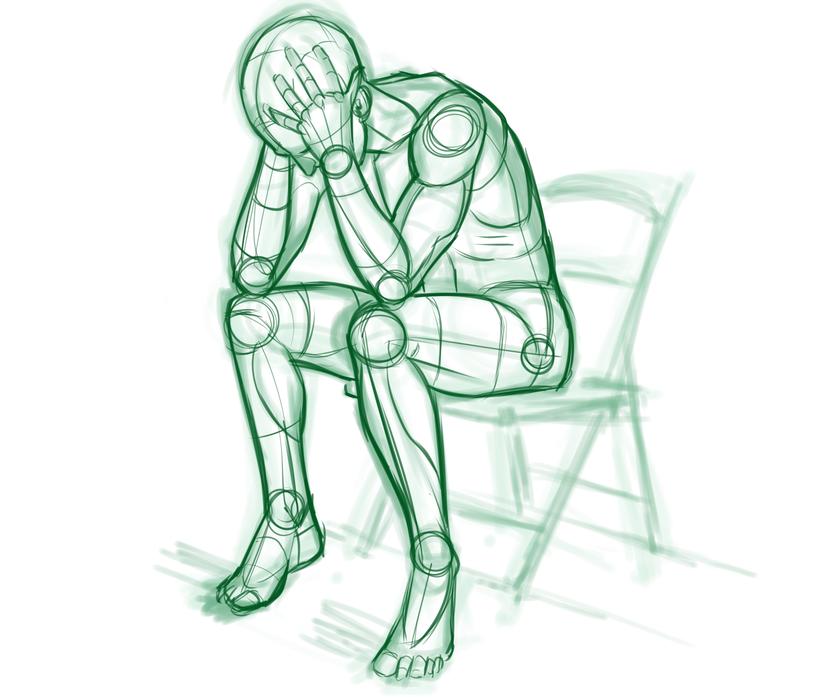
This semester (Fall 2020), I employed a teaching strategy, inspired by something I did last semester (Spring 2020) when the classes abruptly moved online. I created a discussion space for the students to share with me their apprehensions on remote learning. Many students who are used to on-campus classes are apprehensive about the remote learning, and those apprehensions have not lessened any. So to find out what the student apprehensions are for this semester and how can I address them I thought it was a no-brainer to hear from them. And I’m sharing in this post the patterns found in their concerns with the hope that other teachers might benefit.</p>

<p>Before start of the Fall classes, I created a google form and shared it with my students to find out their concerns. I identified patterns in their concerns, grouped them, and outlined how I plan to address them. I believe knowing some of these concerns helps me adapt my pedagogy, plan better, embed flexibility, and assess various course requirements. Most importantly, this exercise demonstrates to the students that I’m at least making an effort at accommodating their issues, an important trust-building exercise at the start of a course.
<!-- more --></p>

<p>Apart from sharing with students my action plan, I also let them know that despite my best efforts, “I might fall short. It’s very important that you develop trust in my intention to help you and you’ll reach out to me whenever in this course you feel like your concerns are not getting addressed.”</p>

<p>Some context about the classes I’m teaching this semester: my students are mostly incoming freshmen; around 65 students responded; the course is first-year composition</p>

<p>With that, below are students’ concerns and my response.</p>

<p>Students’ concern:</p>

<p><strong>Not being able to keep up with the workload, pacing of the course might be too fast, missing deadlines/due dates</strong></p>

<p>My response:</p>

<ul>
  <li>I plan to send regular and timely reminder for the assignments; you will find due dates of the assignment in your Canvas calendar; also, I will share the assignment due dates with you very early in the course or at least at the start of each project so that you can mark your calendar</li>
  <li>I have tried to stagger the workload for you; based on my prior remote and in-person teaching experience, I’ve made necessary changes to ensure that the workload remains manageable for you; but, if you’re struggling to keep up then always let me know; I’m more than happy to work with you to help you catch up and work out an alternative</li>
</ul>

<p><strong>Wi-fi reliability, figuring out zoom, having to learn new learning tools for different courses, not knowing how to navigate Canvas and access the course materials</strong></p>

<ul>
  <li>I’ve ensured that most of the learning will happen within Canvas; so it’s very likely that you won’t be asked to learn/interact with a new tool/platform</li>
  <li>To help you figure out zoom and Canvas, I will be flexible on deadlines during first couple of weeks; I’ll also share a video which will help you figure out how to navigate this course’s resources in Canvas; I’ll also provide technical help as best as I can or share with you necessary resources.</li>
  <li>Wi-fi reliability is a legitimate worry; please check the syllabus policy where I’ve made room to accommodate this concern</li>
</ul>

<p><strong>Staying organized, focused and motivated while working from home, not having a structured time for learning</strong></p>

<ul>
  <li>We’ll meet once a week via zoom; the reading assignments will follow a scheduled pattern; though not enough I believe these small measures might give you a predictable pace and structure</li>
  <li>Working from home is not easy; I struggle with focus and discipline too when working from home; certain distractions are beyond our control; I believe talking about them might help and you can always reach out to me to let me know if you’re frequently not able to keep up with school work because of an issue beyond your control</li>
</ul>

<p><strong>Learning won’t be as engaging as on-campus learning, peer/instructor interactions might lack depth</strong></p>

<ul>
  <li>Your engagement is my priority; to make this writing course relevant to you, I’ve prepared writing projects where you can research/write about a topic that’s important to YOU and your community</li>
  <li>The online discussions provide in-depth interactions in their own way; I believe if you keep an open mind about what counts as in-depth and productive, you will see that online interactions offer certain opportunities that face-to-face interactions don’t</li>
</ul>

<p><strong>Class discussion might be awkward over zoom, social/emotional connection with peers and instructors might not be possible, lack of socialization in the remote environment</strong></p>

<ul>
  <li>These are legitimate concerns; while I do miss being on campus, I don’t think building social/emotional relationship remotely is entirely impossible; maybe we need to measure the quality of our connection differently</li>
  <li>To increase our social interactions, I’m creating space for humor and humanization in this course; we’ll meet weekly via zoom; there’s room for small group interactions/activities so that you can start to build a sense of community; I’ll also post video lessons and encourage video responses from you to make the learning interactive</li>
</ul>

<p><strong>Not getting necessary access to the instructor, what if I have difficulty learning course materials, not getting teacher’s attention to my issues/concerns, lacking one-on-one interaction with the instructor, getting necessary help on my writing</strong></p>

<ul>
  <li>I will be available to meet with you Monday to Friday from 8am-4pm; shoot me an email and we’ll set an appointment depending on our mutual availability to meet virtually</li>
  <li>I stay on top my email; you can always expect my response the same day or at least within 24 hours</li>
  <li>Opportunities for you to individually interact with me will not be sacrificed; I can assure you that; my past students have always appreciated my availability to their concerns and learning needs; so barring any unforeseen circumstance, you’ll receive the same attention too</li>
  <li>You’ll always get individual attention from me on your writing or reading; I can also share with you resources to overcome any challenge you might be facing; I’m invested in helping you become a better writer</li>
</ul>]]></content><author><name>Shailen Mishra</name></author><category term="teaching" /><category term="Remote" /><category term="Learning," /><category term="Student" /><category term="Feedback" /><summary type="html"><![CDATA[This semester (Fall 2020), I employed a teaching strategy, inspired by something I did last semester (Spring 2020) when the classes abruptly moved online. I created a discussion space for the students to share with me their apprehensions on remote learning. Many students who are used to on-campus classes are apprehensive about the remote learning, and those apprehensions have not lessened any. So to find out what the student apprehensions are for this semester and how can I address them I thought it was a no-brainer to hear from them. And I’m sharing in this post the patterns found in their concerns with the hope that other teachers might benefit. Before start of the Fall classes, I created a google form and shared it with my students to find out their concerns. I identified patterns in their concerns, grouped them, and outlined how I plan to address them. I believe knowing some of these concerns helps me adapt my pedagogy, plan better, embed flexibility, and assess various course requirements. Most importantly, this exercise demonstrates to the students that I’m at least making an effort at accommodating their issues, an important trust-building exercise at the start of a course.]]></summary></entry><entry><title type="html">Dalit movement on crowdvoice</title><link href="http://shailenmishra.com/everything-else/2020/01/16/dalit-movement-crowdvoice/" rel="alternate" type="text/html" title="Dalit movement on crowdvoice" /><published>2020-01-16T00:00:00+00:00</published><updated>2020-01-16T00:00:00+00:00</updated><id>http://shailenmishra.com/everything-else/2020/01/16/dalit-movement-crowdvoice</id><content type="html" xml:base="http://shailenmishra.com/everything-else/2020/01/16/dalit-movement-crowdvoice/"><![CDATA[<p>The famous crowdsourcing website and infohub on protests/activism <a href="https://crowdvoice.org/">crowdvoice.org</a> has hung up its boots so to speak. The message on the home page of the website says: “After 10 years of collecting crucial on-the-ground evidence on various social justice issues worldwide, the application will now be in read-only mode. Thank you for all your support.”</p>

<p>Esra’a al Shafei, the founder of crowdvoice, wrote a pragmatic <a href="https://thecorrespondent.com/esraaalshafei">elegy</a> about the project, its success, and what she learned in the process. Though the website has stopped adding new information, there’s ample and percious archival data in its vault to keep us occupied and glued. Future generation of protesters have plenty inspiration to glean, and intellectuals/researchers/journalists have enough fodder and reasons to keep returning to the project.</p>

<p>One such archive is “Caste Based Atrocities and Dalit Movements” of India. The evidences, testimonies, and news materials are neatly organized under Backstory (which is a detailed timeline), Infographic (a broadsheet of data), and Media Feed. This could be a great resource to share with an introductory class on social movements or a class on dalit atrocities.</p>

<p>One particularly unforgettable story in the archive is that of Bant Singh, a Dalit farmer from Punjab, whose limbs were chopped off because he dared to lodge a court case against upper caste assailants who raped his daughter. Bant Singh survived, and he became even more legendary and turned into a community leader by his singing abilities. Here is a short film made on him.</p>

<iframe width="560" height="315" src="https://www.youtube.com/embed/yiQSwzFy7l0" frameborder="0" allow="accelerometer; autoplay; encrypted-media; gyroscope; picture-in-picture" allowfullscreen=""></iframe>]]></content><author><name>Shailen Mishra</name></author><category term="everything-else" /><category term="resistance," /><category term="activism" /><summary type="html"><![CDATA[The famous crowdsourcing website and infohub on protests/activism crowdvoice.org has hung up its boots so to speak. The message on the home page of the website says: “After 10 years of collecting crucial on-the-ground evidence on various social justice issues worldwide, the application will now be in read-only mode. Thank you for all your support.” Esra’a al Shafei, the founder of crowdvoice, wrote a pragmatic elegy about the project, its success, and what she learned in the process. Though the website has stopped adding new information, there’s ample and percious archival data in its vault to keep us occupied and glued. Future generation of protesters have plenty inspiration to glean, and intellectuals/researchers/journalists have enough fodder and reasons to keep returning to the project. One such archive is “Caste Based Atrocities and Dalit Movements” of India. The evidences, testimonies, and news materials are neatly organized under Backstory (which is a detailed timeline), Infographic (a broadsheet of data), and Media Feed. This could be a great resource to share with an introductory class on social movements or a class on dalit atrocities. One particularly unforgettable story in the archive is that of Bant Singh, a Dalit farmer from Punjab, whose limbs were chopped off because he dared to lodge a court case against upper caste assailants who raped his daughter. Bant Singh survived, and he became even more legendary and turned into a community leader by his singing abilities. Here is a short film made on him.]]></summary></entry><entry><title type="html">Speaking of dialogue, in Ann Patchett’s Commonwealth</title><link href="http://shailenmishra.com/books/2017/08/10/speaking-of-dialogue/" rel="alternate" type="text/html" title="Speaking of dialogue, in Ann Patchett’s Commonwealth" /><published>2017-08-10T00:00:00+00:00</published><updated>2017-08-10T00:00:00+00:00</updated><id>http://shailenmishra.com/books/2017/08/10/speaking-of-dialogue</id><content type="html" xml:base="http://shailenmishra.com/books/2017/08/10/speaking-of-dialogue/"><![CDATA[<p><img style="float: left; margin: 5px 20px 10px 0px;" src="/assets/images/commonwealth_cover.jpg" />Ann Patchett’s <em>Commonwealth</em> has this scene at the start of the Chapter 4 that develops primarily through dialogue. In fact, bulk of that chapter is dialogue. The dialogue is between two characters: Franny, a cocktail waitress, and Leon Posen, a customer at the bar and occupationally a writer. The setting is Chicago’s iconic Palmer House Hotel. It’s near closing time for the bar so it’s almost empty. Franny is a huge fan of Leon Posen and she has read all his works quite faithfully. So when she finds out that Leon Posen is at the bar, Franny takes the opportunity to be his bartender to impress her idol. Leon, for his part, has had a few drinks already and he’s smitten by Franny’s beauty. He relishes at the idea of being served by Franny so that she could linger around him.
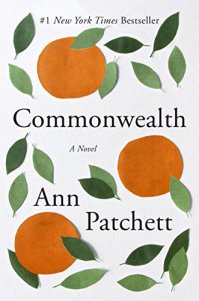
<!-- more --></p>

<p>Essentially, it’s a flirting scene at a bar between a “bartender” and customer which may or may not lead to a hook-up. The premise of the scene is not unremarkable. But Patchett surprises the reader and interweaves the scene with wit and charm that keeps the dialogue wholly engaging. Aspiring writers are often reminded that the dialogue shouldn’t ring flat. But it shouldn’t be too smart either, which is exactly the risk in this case. Patchett is witty and so are her characters in this context. Leon Posen is a well-known literary talent of his generation and Franny is a well-read and sharp devotee. There’s an urge for one character to try and impress the other. So the dialogue could easily turn erudite to a degree that the characters appear pretentiously smart but no longer vulnerable, which is essentially who Franny and Leon are and what draws them to each other. The way Patchett strikes a careful balance in this dialogue becomes a teachable moment.</p>

<blockquote>
  <p>“I was born in Los Angeles,” Franny said, once the couple were mercifully gone. She’d been waiting such a long time to say it she wasn’t sure the point still had any conversational relevance.<br />
“But you had the sense to get out.”<br />
“I like Los Angeles.” In Los Angeles she was always a child. She swam the length of Marjorie’s mother’s pool, skimming its blue bottom in her two-piece bathing suit. The shadow of Caroline, half-asleep on her inflatable raft, was a rectangular cloud above her. Their father was just at the water’s edge in a lounge chair reading <em>The Godfather</em>.<br />
“You say that because we’re in Chicago and it’s February.”<br />
“If L.A.’s so awful why do you live there?”<br />
“I have a wife in Los Angeles,” he said. “That’s something I’m working on.”<br />
“That’s why people come to Chicago,” Franny said, “To get away from wives.” She was thinking of divorce law, thinking now there was a practice she’d never touch, before she remembered that she’d never touch any of them.<br />
“You sound like a bartender.”<br />
She shook her head. “I’m a cocktail waitress. I can’t mix a drink.”<br />
“You’re a bartender to those of us who don’t need their drinks mixed, and I’d like another scotch. You did a very good job getting that first one in the glass.” He studied her then as if she had only now stepped in front of him. “You’re taller again.”<br />
“You told me it might improve my tip.”<br />
He shook his head. “No, you told <em>me</em> it might improve your tip, and it won’t. I don’t actually care how tall you are. Take off your shoes and I’ll buy you a drink.”</p>
</blockquote>

<p>I once came across this nugget of information (I can’t remember where) that if a manuscript has to get past the <a href="https://www.theguardian.com/books/booksblog/2007/may/23/theshockingtruthaboutthes">slush pile</a> then dialogue is its savior. The worth of a writer is determined by his/her ability to write a good dialogue scene. So a manuscript is opened to a random page with dialogue in it and the manuscript reader determines if the dialogue is good or bad, and subsequently the chance of reading the entire manuscript. Whether this practice of filtering manuscripts is true or not, I haven’t confirmed. But it always interested me how much emphasis is put on the dialogue. There’s something satisfying and tricky about dialogue writing. For one thing, dialogue feels action-oriented. It quickens the pace of the narrative. It feels lively. Most importantly, it feels like a direct window to the character’s soul. At the same time, dialogue can be demanding, for the number of targets (characterization, action, plot, voice, etc.) that need to be hit concurrently in few words.</p>

<p>Some of the writers whose dialogue writing really stands out for me are Frank O’Connor, Alice Munro, Anton Chekhov, Gabriel García Márquez, and William Faulkner. Frank O’Connor is unsurpassable in this art I believe. His short story “Guests of the Nation” is a brilliant example of how dialogue can lend a lively and emotive voice to a character. Márquez, who is so sparing in his usage of dialogue, makes sure that every time his characters speak they stand out. In <em>One Hundred Years of Solitude</em>, there’s nothing mundane or ordinary about the characters’ speech. Every time they open their mouth, they sound so larger than life, ironical, edgy, prophetic, or portentous.</p>

<p>There are many ways to good dialogue writing. Good writers must have their own rules and standard for what count as good dialogue. The one that I have found to be helpful is to align the tone and language of the dialogue to the characters’ vulnerability and follies. In that way, a space is created in the dialogue for empathy, irony, foreshadowing, and suspense. Patchett’s dialogue that I have sampled above is definitely not a textbook case of flirting. It is charming and witty, but at the same time quirky. But the scene’s focus is beyond the present. Whether Franny and Leon will hook up is not the dialogue’s only goal; rather, it foreshadows the future: why the relationship between the two evolves the way it does.</p>]]></content><author><name>Shailen Mishra</name></author><category term="books" /><category term="AnnPatchett," /><category term="DialogueWriting" /><summary type="html"><![CDATA[Ann Patchett’s Commonwealth has this scene at the start of the Chapter 4 that develops primarily through dialogue. In fact, bulk of that chapter is dialogue. The dialogue is between two characters: Franny, a cocktail waitress, and Leon Posen, a customer at the bar and occupationally a writer. The setting is Chicago’s iconic Palmer House Hotel. It’s near closing time for the bar so it’s almost empty. Franny is a huge fan of Leon Posen and she has read all his works quite faithfully. So when she finds out that Leon Posen is at the bar, Franny takes the opportunity to be his bartender to impress her idol. Leon, for his part, has had a few drinks already and he’s smitten by Franny’s beauty. He relishes at the idea of being served by Franny so that she could linger around him.]]></summary></entry><entry><title type="html">The Notion of Deliverance in Colson Whitehead’s The Underground Railroad</title><link href="http://shailenmishra.com/books/2017/05/01/the-underground-railroad/" rel="alternate" type="text/html" title="The Notion of Deliverance in Colson Whitehead’s The Underground Railroad" /><published>2017-05-01T00:00:00+00:00</published><updated>2017-05-01T00:00:00+00:00</updated><id>http://shailenmishra.com/books/2017/05/01/the-underground-railroad</id><content type="html" xml:base="http://shailenmishra.com/books/2017/05/01/the-underground-railroad/"><![CDATA[<p><img style="float: left; margin: 5px 20px 10px 0px;" src="/assets/images/underground_railroad_cover.jpg" />There’s this line toward the very end of Colson Whitehead’s book, <em>The Underground Railroad</em>: “She trusted the slave’s choice to guide her—anywhere, anywhere but where you are escaping from.” This is a realization that comes to Cora, the protagonist and a runaway slave who is seeking lasting deliverance. Cora’s realization is a reminder to the self, a lesson in survival. She’s been on the run from Georgia to South Carolina, then to North Carolina, Tennessee, and Indiana. Yet, she’s still fleeing: to go anywhere, any other place that’s an escape from the present condition. But that “anywhere” is only a transient state before it reminds a runaway slave that he/she is on the hunt again. And he/she has to seek a new refuge, a new “anywhere.” The unifying thought that holds together Whitehead’s novel is this question: where does, if at all, that “anywhere” exist for an enslaved person?
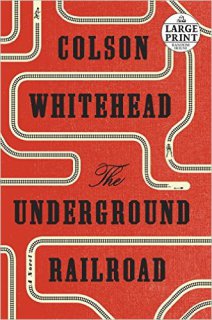
<!-- more --></p>

<p>Cora’s survival is dependent on finding an answer to this question. Her search leads her to different states: from Southern to Midwest. In each state, she unearths an endemic (insidious or openly savage) system of subjugating the black body. When the horror of one state’s brutality toward black people is revealed to her, Cora assumes her “slave’s choice,” which is no choice at all. She escapes thinking may be her next destination will free her from her bondage.</p>

<p>Cora’s quest becomes a vehicle for Whitehead to expose the barbarity of slavery and how the racism that it fueled and sustained came to be the consolidating force behind the white civilization in US. The bane of racism has left no state untouched. How could you protect one part of a nation from the evil it practices in another? A slave is infected with one festering hope that beyond his/her master’s territory things are better (in Cora’s case the slavery that afflicts Deep South does not trespass to the rest of the country). But Cora in her search for refuge finds out what a myth such a notion is. Cora’s quest and her subsequent disappointment translates to the thematic and structural continuity in Whitehead’s narrative. In his mission to answer the question, whether for a slave “anywhere” has a name to it, Whitehead finds a potent means to illuminate the obstacles and the complicity of the agents behind those obstacles. By the end of the book, it’s an open question if Cora could ever be secure about her future. Would she ever find permanent deliverance? This open-endedness allows for a temporal continuum to the contemporary times. Have the black people stopped fleeing the oppressive conditions of slavery? Have they found a true sanctuary?</p>

<p>A precise and tightly-woven narrative needs a unifying thought. Staying true to it at all times allows the writer to shed fluff. <em>The Underground Railroad</em> is a highly cohesive narrative in that regard. It probes richly the central question it poses for itself to illuminate why and how black people’s escape since enslavement hasn’t found closure in America.</p>

<p>There’s one scene in the book that stood out for me. For me, it encapsulates how psychologically scarring slavery is. Not just for the slaves but for slavers too. The very monstrosity and animus that animate the white slavers and their henchmen leave them so thoroughly dehumanized.</p>

<blockquote>
  <p>The slave catcher got into the wagon for the first time since he picked up Cora. He held Boseman’s pistol in his hand and shot Jasper in the face. The blood and the bone covered the inside of the canopy, splashing Cora’s filthy shift. Ridgeway wiped his face and explained his reasoning. Jasper’s reward was fifty dollars, fifteen of that for the tinker who brought the fugitive to jail. Missouri, back east, Georgia—it would be weeks before they delivered the man to his owner. Divide thirty-five dollars by, say, three weeks, minus Boseman’s share, and the lost bounty was a very small price to pay for silence and a restful mind.<br /><br />
Homer opened his notebook and checked his boss’s figures. “He’s right,” he said.</p>
</blockquote>

<p>The cold brutality of the scene. Chilling and shocking. Whitehead pushes the reader into the dark world of slavery and does not allow the reader to look away. Deep immersion is necessary to come face to face with the savagery of slavery. Be it the Freedom Trail of North Carolina (where battered and eviscerated lynched bodies sway from the tree branches for unending miles) or the horror show of the cold-blooded execution that happens in the Randall plantation, there’s no end to the turpitude of slavers. What differentiates one oppressor from another is the method and the deranged logic inherent in it, as if it were a competition. So in the above scene, Ridgeway , a manic and notorious slave catcher, breaks down his killing to pure economic merit.</p>

<p>Cora’s observations and thoughts are profound as well as a severe indictment of a society/nation. At one point she contemplates what’s justice? After witnessing so much human cruelty she wonders where is the providential justice? She thinks:</p>

<blockquote>
  <p>Tennessee was cursed. Initially she assigned the devastation of Tennessee—the blaze and the disease—to justice. The whites got what they deserved. For enslaving her people, for massacring another race, for stealing the very land itself. Let them burn by flame or fever, let the destruction started here rove acre by acre until the dead have been avenged. But if people received their just portion of misfortune, what had she done to bring her troubles on herself? In another list, Cora marked the decisions that led her to this wagon and its iron rings. There was the boy Chester, and how she had shielded him. The whip was the standard punishment for disobedience. Running away was a transgression so large that the punishment enveloped every generous soul on her brief tour of freedom. Bouncing on the wagon springs, she smelled the damp earth and the heaving trees. Why had this field escaped while another burned five miles back? Plantation justice was mean and constant, but the world was indiscriminate. Out in the world, the wicked escaped comeuppance and the decent stood in their stead at the whipping tree. Tennessee’s disasters were the fruit of indifferent nature, without connection to the crimes of the homesteaders. To how the Cherokee had lived their lives.</p>
</blockquote>]]></content><author><name>Shailen Mishra</name></author><category term="books" /><category term="ColsonWhitehead" /><category term="NovelWriting" /><category term="NarrativeStructure" /><category term="Theme" /><summary type="html"><![CDATA[There’s this line toward the very end of Colson Whitehead’s book, The Underground Railroad: “She trusted the slave’s choice to guide her—anywhere, anywhere but where you are escaping from.” This is a realization that comes to Cora, the protagonist and a runaway slave who is seeking lasting deliverance. Cora’s realization is a reminder to the self, a lesson in survival. She’s been on the run from Georgia to South Carolina, then to North Carolina, Tennessee, and Indiana. Yet, she’s still fleeing: to go anywhere, any other place that’s an escape from the present condition. But that “anywhere” is only a transient state before it reminds a runaway slave that he/she is on the hunt again. And he/she has to seek a new refuge, a new “anywhere.” The unifying thought that holds together Whitehead’s novel is this question: where does, if at all, that “anywhere” exist for an enslaved person?]]></summary></entry><entry><title type="html">US-Mexico border</title><link href="http://shailenmishra.com/everything-else/2017/02/26/us-mexico-border/" rel="alternate" type="text/html" title="US-Mexico border" /><published>2017-02-26T00:00:00+00:00</published><updated>2017-02-26T00:00:00+00:00</updated><id>http://shailenmishra.com/everything-else/2017/02/26/us-mexico-border</id><content type="html" xml:base="http://shailenmishra.com/everything-else/2017/02/26/us-mexico-border/"><![CDATA[<p><img src="/assets/images/us-mexico-border.png" alt="" /></p>

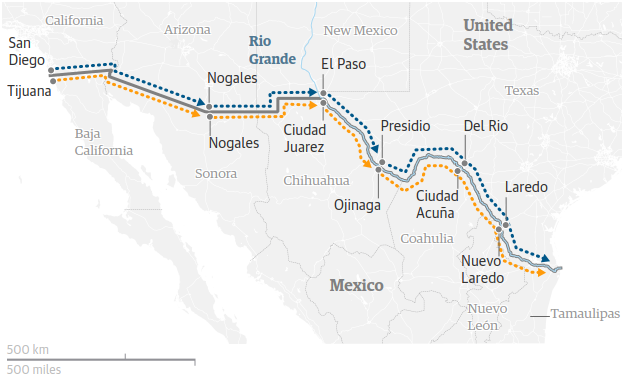
<p>Three AFP photographers went out on a mission to capture US-Mexico border in pictures. Their curiosity was what does the border physically look like? What would the proposed wall (as promised by Trump administration) do? The photo-essay <a href="https://www.theguardian.com/artanddesign/2017/feb/23/cut-in-two-travels-along-the-us-mexico-border-a-photo-essay">“Cut in two: travels along the US-Mexico border – a photo essay”</a> is the result of their 2000-mile long journey.
<!-- more --></p>

<p>From the entire essay, this photo stood out for me:</p>

<p><img src="/assets/images/pancho-villa-columbus.jpg" alt="" title="Pancho Villa in Columbus, New Mexico Photograph by: Jim Watson/AFP/Getty Images" /></p>

<p>You know how mileposts can be very assuring, a physical marker to assure ourselves of where we are. In vast no-man’s land, a milepost can check the infiniteness and reinstate coherency. But there’s more. It can also blur the boundary. Let your imagination leap the border. Bring home the feeling of togetherness.</p>]]></content><author><name>Shailen Mishra</name></author><category term="everything-else" /><summary type="html"><![CDATA[Three AFP photographers went out on a mission to capture US-Mexico border in pictures. Their curiosity was what does the border physically look like? What would the proposed wall (as promised by Trump administration) do? The photo-essay “Cut in two: travels along the US-Mexico border – a photo essay” is the result of their 2000-mile long journey.]]></summary></entry><entry><title type="html">When students take Wikipedia to be proverbial bible</title><link href="http://shailenmishra.com/teaching/2017/02/13/students-reliance-on-wikipedia/" rel="alternate" type="text/html" title="When students take Wikipedia to be proverbial bible" /><published>2017-02-13T00:00:00+00:00</published><updated>2017-02-13T00:00:00+00:00</updated><id>http://shailenmishra.com/teaching/2017/02/13/students-reliance-on-wikipedia</id><content type="html" xml:base="http://shailenmishra.com/teaching/2017/02/13/students-reliance-on-wikipedia/"><![CDATA[<p>I often remind my students before research writing projects of what counts as credible source and what not. There’s more debate to be had on this issue these days since students are more dependent on the world wide web for their research than ever before. It’s often difficult to delineate which websites can be more trustworthy than other and more so, which can be quoted in a research paper in a composition class. So what about Wikipedia? Many students get that Wikipedia is not a source to cite in academic papers unless there’s a point to be made about the encyclopedia itself. But very few students though remember and apply to use Wikipedia as a tool for deepening their research. Maybe this quote from Katherine Maher, Executive Director of the Wikimedia Foundation, will help to emphasize that idea. This is from an <a href="https://www.theguardian.com/technology/2017/feb/12/wikipedia-daily-mail-reliability-ban-katherine-maher">interview</a> she gave to <em>The Guardian</em>:</p>

<blockquote>
  <p>If you are going to do original research, especially if you are going to write a paper or do a piece for publication, it should go into more detail, talk to primary and secondary sources and the like. Wikipedia fills a different role [that of being a jumping-off point].</p>
</blockquote>]]></content><author><name>Shailen Mishra</name></author><category term="teaching" /><summary type="html"><![CDATA[I often remind my students before research writing projects of what counts as credible source and what not. There’s more debate to be had on this issue these days since students are more dependent on the world wide web for their research than ever before. It’s often difficult to delineate which websites can be more trustworthy than other and more so, which can be quoted in a research paper in a composition class. So what about Wikipedia? Many students get that Wikipedia is not a source to cite in academic papers unless there’s a point to be made about the encyclopedia itself. But very few students though remember and apply to use Wikipedia as a tool for deepening their research. Maybe this quote from Katherine Maher, Executive Director of the Wikimedia Foundation, will help to emphasize that idea. This is from an interview she gave to The Guardian: If you are going to do original research, especially if you are going to write a paper or do a piece for publication, it should go into more detail, talk to primary and secondary sources and the like. Wikipedia fills a different role [that of being a jumping-off point].]]></summary></entry><entry><title type="html">A horror story at US border</title><link href="http://shailenmishra.com/everything-else/teaching/writing/2017/02/09/a-horror-story-at-us-border/" rel="alternate" type="text/html" title="A horror story at US border" /><published>2017-02-09T00:00:00+00:00</published><updated>2017-02-09T00:00:00+00:00</updated><id>http://shailenmishra.com/everything-else/teaching/writing/2017/02/09/a-horror-story-at-us-border</id><content type="html" xml:base="http://shailenmishra.com/everything-else/teaching/writing/2017/02/09/a-horror-story-at-us-border/"><![CDATA[<blockquote class="embedly-card"><h4><a href="https://www.theguardian.com/us-news/2017/feb/09/us-immigration-border-mexico-desert-no-more-deaths?CMP=Share_AndroidApp_Keep">19,444 gallons of water in the desert: how volunteers save lives at the US border</a></h4><p>Carrot Quinn volunteered with No More Deaths, an organization devoted to those who risk dehydration entering the US where the wilderness is a 'weapon' e're walking in the Growler Valley near Ajo, Arizona, sidestepping around bristling cholla cactuses and traversing the deep, sandy washes that cut the land when we find the skull.</p></blockquote>
<script async="" src="//cdn.embedly.com/widgets/platform.js" charset="UTF-8"></script>

<p><a href="https://www.theguardian.com/us-news/2017/feb/09/us-immigration-border-mexico-desert-no-more-deaths?CMP=Share_AndroidApp_Keep">This essay</a> by Carrot Quinn is a good example of blending of personal writing and journalism.  When you cover an issue that is so difficult and emotionally eviscerating and you’re an eye-witness to numerous speechless victims whose stories will go untold and you have the burden of relaying that condition of omission and then there are these difficult questions like “what for? why? how could we?”, it is hard to check your outrage and balance the needs of a perfect narrative.</p>

<p>Quinn writes: “It wasn’t always this way; for decades, the route into the US was less hazardous to human life, and yearly deaths hovered in the single digits. Then, in the mid 1990s, the Border Patrol adopted a strategy called “prevention through deterrence”: urban areas were walled off and checkpoints were placed in such a way that people attempting to cross were funneled into the driest, most remote and brutal parts of the desert, far from roads, resources or possible rescue. In other words, the US Border Patrol used the <a href="https://www.theguardian.com/us-news/2016/dec/07/report-us-border-patrol-desert-weapon-immigrants-mexico">desert wilderness as a weapon</a>.”</p>]]></content><author><name>Shailen Mishra</name></author><category term="everything-else" /><category term="teaching" /><category term="writing" /><summary type="html"><![CDATA[19,444 gallons of water in the desert: how volunteers save lives at the US borderCarrot Quinn volunteered with No More Deaths, an organization devoted to those who risk dehydration entering the US where the wilderness is a 'weapon' e're walking in the Growler Valley near Ajo, Arizona, sidestepping around bristling cholla cactuses and traversing the deep, sandy washes that cut the land when we find the skull. This essay by Carrot Quinn is a good example of blending of personal writing and journalism. When you cover an issue that is so difficult and emotionally eviscerating and you’re an eye-witness to numerous speechless victims whose stories will go untold and you have the burden of relaying that condition of omission and then there are these difficult questions like “what for? why? how could we?”, it is hard to check your outrage and balance the needs of a perfect narrative. Quinn writes: “It wasn’t always this way; for decades, the route into the US was less hazardous to human life, and yearly deaths hovered in the single digits. Then, in the mid 1990s, the Border Patrol adopted a strategy called “prevention through deterrence”: urban areas were walled off and checkpoints were placed in such a way that people attempting to cross were funneled into the driest, most remote and brutal parts of the desert, far from roads, resources or possible rescue. In other words, the US Border Patrol used the desert wilderness as a weapon.”]]></summary></entry><entry><title type="html">What Obama Has to Teach us About Reading and Literature?</title><link href="http://shailenmishra.com/everything-else/2017/01/18/obama-on-writing-literature/" rel="alternate" type="text/html" title="What Obama Has to Teach us About Reading and Literature?" /><published>2017-01-18T00:00:00+00:00</published><updated>2017-01-18T00:00:00+00:00</updated><id>http://shailenmishra.com/everything-else/2017/01/18/obama-on-writing-literature</id><content type="html" xml:base="http://shailenmishra.com/everything-else/2017/01/18/obama-on-writing-literature/"><![CDATA[<p><a class="embedly-card" data-card-controls="0" href="https://www.nytimes.com/2017/01/16/books/transcript-president-obama-on-what-books-mean-to-him.html?ref=oembed">Transcript: President Obama on What Books Mean to Him</a>
<script async="" src="//cdn.embedly.com/widgets/platform.js" charset="UTF-8"></script></p>

<p>I was reading Barack Obama’s <a href="https://www.nytimes.com/2017/01/16/books/transcript-president-obama-on-what-books-mean-to-him.html?ref=oembed">interview</a> with Michiko Kakutani on NY Times today. Obama speaks of his love for books, especially novels. His opinion on literature is as astute as a literary critic’s. He thinks that literature is necessary for everyone to read and even more so for a president. According to him, literature teaches you empathy and the ability to quiet your brain to think. The fact that a lawyer/politician/powerful leader chooses literature as a means to build these two qualities is the important point here.</p>

<p>Before I entered into the discipline of writing and literature, I was trained as an engineer. I know that I learned what empathy is and how to row past my own prejudices through novels. I feel like literature is for everyone. It’s an essential survival means for all of us. Secondly, Obama’s point on focus makes an even stronger case about why the books are the remedy to our ADHD minds. I worry about myself, my generation, and the generation after us about the influence of technology on human minds, on our ability to quiet our brains, to embrace boredom, and to not split into atoms of zillion distraction before finishing a book.</p>

<p>Here are few quotes from Obama’s interview:</p>

<blockquote>
  <ol>
    <li>“And so I think that I found myself better able to imagine what’s going on in the lives of people throughout my presidency because of not just a specific novel but the act of reading fiction. It exercises those muscles, and I think that has been helpful.”</li>
  </ol>
</blockquote>

<blockquote>
  <ol>
    <li>“And that’s why seeing my daughters now picking up books that I read 30 years ago or 40 years ago is gratifying, because I want them to have perspective — not for purposes of complacency, but rather to give them confidence that people with a sense of determination and courage and pluck can reshape things. It’s empowering for them.”</li>
  </ol>
</blockquote>

<blockquote>
  <ol>
    <li>“But one of the things I’m confident about is that, out of this moment, there are a whole bunch of writers, a lot of them young, who are probably writing the book I need to read. [Laughter] They’re ahead of me right now. And so in my post-presidency, in addition to training the next generation of leaders to work on issues like climate change or gun violence or criminal justice reform, my hope is to link them up with their peers who see fiction or nonfiction as an important part of that process.<br /><br />“When so much of our politics is trying to manage this clash of cultures brought about by globalization and technology and migration, the role of stories to unify — as opposed to divide, to engage rather than to marginalize — is more important than ever.<br /><br />“There’s something particular about quieting yourself and having a sustained stretch of time that is different from music or television or even the greatest movies.<br /><br />“And part of what we’re all having to deal with right now is just a lot of information overload and a lack of time to process things. So we make quick judgments and assign stereotypes to things, block certain things out, because our brain is just trying to get through the day.”</li>
  </ol>
</blockquote>]]></content><author><name>Shailen Mishra</name></author><category term="everything-else" /><summary type="html"><![CDATA[Transcript: President Obama on What Books Mean to Him I was reading Barack Obama’s interview with Michiko Kakutani on NY Times today. Obama speaks of his love for books, especially novels. His opinion on literature is as astute as a literary critic’s. He thinks that literature is necessary for everyone to read and even more so for a president. According to him, literature teaches you empathy and the ability to quiet your brain to think. The fact that a lawyer/politician/powerful leader chooses literature as a means to build these two qualities is the important point here. Before I entered into the discipline of writing and literature, I was trained as an engineer. I know that I learned what empathy is and how to row past my own prejudices through novels. I feel like literature is for everyone. It’s an essential survival means for all of us. Secondly, Obama’s point on focus makes an even stronger case about why the books are the remedy to our ADHD minds. I worry about myself, my generation, and the generation after us about the influence of technology on human minds, on our ability to quiet our brains, to embrace boredom, and to not split into atoms of zillion distraction before finishing a book. Here are few quotes from Obama’s interview: “And so I think that I found myself better able to imagine what’s going on in the lives of people throughout my presidency because of not just a specific novel but the act of reading fiction. It exercises those muscles, and I think that has been helpful.” “And that’s why seeing my daughters now picking up books that I read 30 years ago or 40 years ago is gratifying, because I want them to have perspective — not for purposes of complacency, but rather to give them confidence that people with a sense of determination and courage and pluck can reshape things. It’s empowering for them.” “But one of the things I’m confident about is that, out of this moment, there are a whole bunch of writers, a lot of them young, who are probably writing the book I need to read. [Laughter] They’re ahead of me right now. And so in my post-presidency, in addition to training the next generation of leaders to work on issues like climate change or gun violence or criminal justice reform, my hope is to link them up with their peers who see fiction or nonfiction as an important part of that process.“When so much of our politics is trying to manage this clash of cultures brought about by globalization and technology and migration, the role of stories to unify — as opposed to divide, to engage rather than to marginalize — is more important than ever.“There’s something particular about quieting yourself and having a sustained stretch of time that is different from music or television or even the greatest movies.“And part of what we’re all having to deal with right now is just a lot of information overload and a lack of time to process things. So we make quick judgments and assign stereotypes to things, block certain things out, because our brain is just trying to get through the day.”]]></summary></entry><entry><title type="html">The Messy Formula to be Creative</title><link href="http://shailenmishra.com/writing/2017/01/13/messy-creativity/" rel="alternate" type="text/html" title="The Messy Formula to be Creative" /><published>2017-01-13T00:00:00+00:00</published><updated>2017-01-13T00:00:00+00:00</updated><id>http://shailenmishra.com/writing/2017/01/13/messy-creativity</id><content type="html" xml:base="http://shailenmishra.com/writing/2017/01/13/messy-creativity/"><![CDATA[<p>I start 2017 with this TedTalks video that I often share with my writing students. I try to convince them that constraint isn’t always detrimental to creativity. Rather, right type of constraints can inspire a person and propel him/her to find a creative solution. The speaker of this TedTalk, Tim Harford, shares several examples where constraints  (“mess” as per him) led to creative solutions despite reservations from the persons struggling with constraints. If you’re a teacher struggling to convince your students of the ambitious writing projects, share this video.</p>

<iframe width="560" height="315" src="https://www.youtube.com/embed/N7wF2AdVy2Q?rel=0" frameborder="0" allow="autoplay; encrypted-media" allowfullscreen=""></iframe>

<p>To take the notion of “mess” further (from abstract to a concrete level), Harford in <a href="https://www.ft.com/content/e6f82da0-8b4d-11e6-8cb7-e7ada1d123b1">this article</a> talks about how a messy desk is not necessarily a sign of sloppiness and inefficiency. Being superorganised and an obsessive planner can suck up too much time and, in fact, can heighten stress. Pay attention to the “filer” and “piler” categories that this article talks about. It’s not always the case that organized people are more productive or that they stay on top of their workload. Being messy and disorganized have their own advantages.</p>]]></content><author><name>Shailen Mishra</name></author><category term="writing" /><summary type="html"><![CDATA[I start 2017 with this TedTalks video that I often share with my writing students. I try to convince them that constraint isn’t always detrimental to creativity. Rather, right type of constraints can inspire a person and propel him/her to find a creative solution. The speaker of this TedTalk, Tim Harford, shares several examples where constraints (“mess” as per him) led to creative solutions despite reservations from the persons struggling with constraints. If you’re a teacher struggling to convince your students of the ambitious writing projects, share this video. To take the notion of “mess” further (from abstract to a concrete level), Harford in this article talks about how a messy desk is not necessarily a sign of sloppiness and inefficiency. Being superorganised and an obsessive planner can suck up too much time and, in fact, can heighten stress. Pay attention to the “filer” and “piler” categories that this article talks about. It’s not always the case that organized people are more productive or that they stay on top of their workload. Being messy and disorganized have their own advantages.]]></summary></entry><entry><title type="html">Disappearing Case of “the” from English</title><link href="http://shailenmishra.com/everything-else/2016/01/04/disappearing-case-of-the/" rel="alternate" type="text/html" title="Disappearing Case of “the” from English" /><published>2016-01-04T00:00:00+00:00</published><updated>2016-01-04T00:00:00+00:00</updated><id>http://shailenmishra.com/everything-else/2016/01/04/disappearing-case-of-the</id><content type="html" xml:base="http://shailenmishra.com/everything-else/2016/01/04/disappearing-case-of-the/"><![CDATA[<p>Yes, the determiner “the” seems to be disappearing from our writing and speech at an accelerated rate than anticipated. Who or what to blame? Well, it’s not clear yet. Easy suspects are texting, instant messaging, etc. But that sort of hypothesis will be simplistic, as <a href="http://languagelog.ldc.upenn.edu/nll/?p=23277">this Language Log article</a> suggests. As for me, if you point out that I have skipped a determiner in this post, my response: ‘Tis the trend, dude.</p>]]></content><author><name>Shailen Mishra</name></author><category term="everything-else" /><summary type="html"><![CDATA[Yes, the determiner “the” seems to be disappearing from our writing and speech at an accelerated rate than anticipated. Who or what to blame? Well, it’s not clear yet. Easy suspects are texting, instant messaging, etc. But that sort of hypothesis will be simplistic, as this Language Log article suggests. As for me, if you point out that I have skipped a determiner in this post, my response: ‘Tis the trend, dude.]]></summary></entry></feed>